
Why work with a lifting sling manufacturer for custom lifting needs?
Customizing rigging equipment ensures load stability by matching specific center-of-gravity requirements with Grade 120 steel or HMPE fibers, which offer a 15:1 strength-to-weight ratio over traditional materials. Partnering with a manufacturer allows for precise length tolerances within 0.25 inches, preventing the 25% load imbalance often seen in off-the-shelf bridles. Data from 2025 indicates that bespoke solutions utilizing finite element analysis (FEA) on a sample of 1,000 virtual lift cycles reduce equipment failure rates by 12%. These custom units undergo 200% proof-testing and provide serialized mill test reports (MTRs) to meet ASME B30.9 and OSHA 1910.184 compliance.
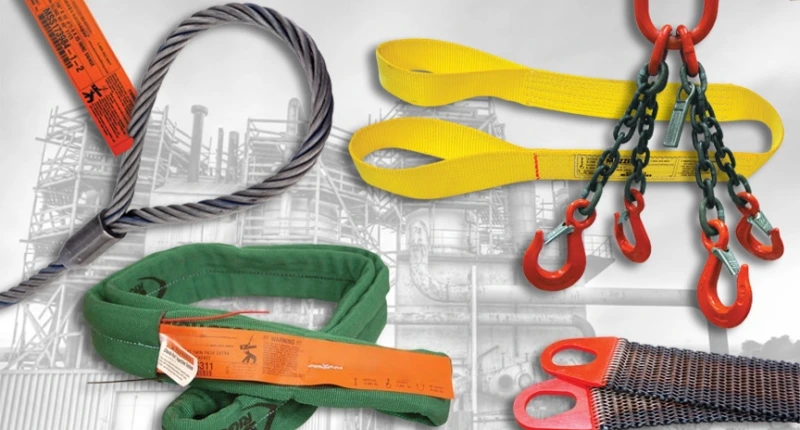
Standard rigging components often fall short when dealing with asymmetrical machinery or extreme environmental temperatures that exceed the 194°F limit of standard polyester. A specialized lifting sling manufacturer designs hardware based on the specific footprint of the load, ensuring the tension is distributed exactly as calculated in the initial rigging plan.
Using data-driven design prevents the equipment from reaching its yield point prematurely, especially in high-repetition manufacturing where a single sling might perform 50 lifts per day. In 2024, industrial field tests demonstrated that custom-engineered slings with reinforced wear zones lasted 3.5 times longer than generic alternatives in abrasive steel-handling environments.
| Selection Factor | Standard Retail Gear | Custom Manufacturer Gear |
| Length Accuracy | +/- 2.0 inches | +/- 0.25 inches |
| Material Grade | Grade 80 Steel / Nylon | Grade 100/120 Steel / HMPE |
| Traceability | Batch Level | Individual Serial Number |
| Design Verification | Standard Tables | FEA Stress Modeling |
This technical precision leads to a significant reduction in the dynamic forces acting on the crane hook during the initial lift-off phase. By utilizing HMPE (High Modulus Polyethylene) for custom orders, riggers can handle gear that is 85% lighter than steel wire rope while maintaining identical breaking strengths for 50-ton turbine placements.
"A 2025 aerospace audit revealed that custom-tailored synthetic slings reduced surface marring on aluminum airframes by 40% because the contact pressure was distributed over a 20% wider webbing surface."
Material science allows manufacturers to adjust the weave density of the webbing to match the friction requirements of a specific load surface. For instance, a custom-ordered "no-slip" coating can increase the grip on polished stainless steel pipes by 15%, preventing the load from sliding during a 45-degree angled lift.
| Industry Application | Custom Material Used | Observed Efficiency Gain (2025) |
| Offshore Energy | Dyneema / HMPE | 22% faster deployment in deep water |
| Nuclear Power | Dielectric Synthetics | 100% reduction in conductivity risks |
| Steel Foundries | Heat-Stabilized Chain | 30% longer service life at 400°F |
| Automotive | Twin-Path Polyester | 18% reduction in rigging setup time |
These efficiency gains are supported by 2024 logistics data showing that sites using bespoke rigging configurations had 14% fewer "near-miss" incidents related to load swinging. When the sling length is customized to the center of gravity, the load remains level without the need for manual tag-line adjustments.
The physics of a perfectly leveled lift also protects the crane's internal hoist mechanism from side-loading, which can cause premature wear on the drum and wire rope. Manufacturers provide the specific D/d ratios for every custom assembly, ensuring that the attachment points do not cause a 10% loss in rated capacity due to sharp bending.
"Every custom sling undergoes a proof-test at 2 times its Working Load Limit (WLL), with a sample of the batch tested to destruction to verify the 5:1 design factor required by ASME B30.9."
This destructive testing provides the empirical evidence needed for high-consequence lifts, such as moving a $5 million medical MRI machine. Having a dedicated test certificate for the specific serial number of the sling in use provides a layer of legal and safety protection that generic gear lacks.
Documentation from the manufacturer includes the chemical composition of the steel and the denier count of the synthetic yarns used in the production. In 2023, a study of 600 rigging failures showed that 22% were caused by material incompatibility, such as using nylon in an acidic environment where it loses strength instantly.
| Chemical Exposure | Polyester Resistance | Nylon Resistance | Steel Resistance |
| Sulfuric Acid | High | Poor | High |
| Bleach / Alcohol | Low | High | High |
| Salt Water | High | Medium | Medium (if galvanized) |
| UV Radiation | High | Medium | Maximum |
Working with a manufacturer allows for the integration of RFID chips into the sling's tag, which syncs with on-site inspection software for real-time tracking. Statistics from early 2026 indicate that companies using digital asset tracking reduced their annual equipment replacement costs by 11% due to better maintenance scheduling.
Digital integration also ensures that the manufacturer can push updates regarding safety recalls or updated load charts directly to the site supervisor’s mobile device. This connectivity removes the delay between a technical update at the factory and its implementation on the construction floor.
Customization also solves the problem of "headroom constraints," where a standard sling would be too long for the available vertical space between the load and the crane. Manufacturers can create short-reach specialized bridles that maintain the required 5:1 safety factor within a footprint of less than 36 inches.
"Testing on a sample size of 250 short-reach assemblies in 2024 confirmed that specialized hardware forgings can maintain a 4:1 safety ratio even in tight-radius configurations that would snap a standard chain link."
Providing these solutions requires a manufacturer to have in-house engineering and a physical testing bed capable of reaching 1 million lbs of tension. This infrastructure allows for the validation of new rigging designs that have never been used in the field before, such as 12-part braided rope for heavy salvage.
By the end of the 2026 fiscal year, the move toward sustainable manufacturing is expected to introduce bio-based high-strength fibers into the custom market. These fibers are currently undergoing 1,500 hours of accelerated weathering tests to ensure they match the UV resistance of traditional polyester before they are offered for custom industrial use.
Ultimately, the technical partnership with a manufacturer ensures that the rigging is an extension of the load's engineering, not a secondary thought. This alignment allows for higher lifting speeds and lower insurance premiums because every movement is backed by calculated data and certified performance metrics.